
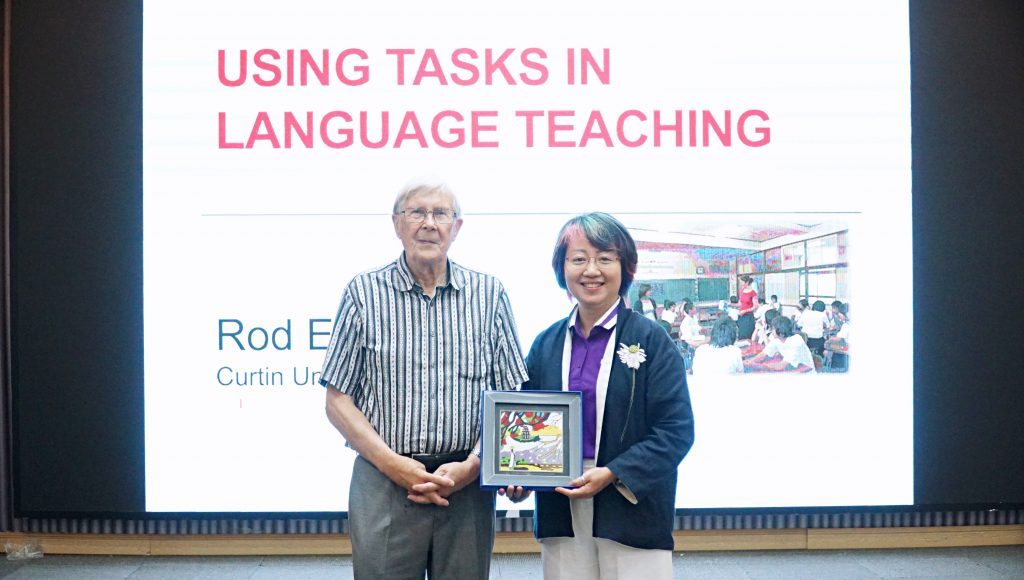
On April 22, 2026, an academic symposium titled “Using Tasks in Language Teaching” was held at Sunwah Hall, featuring Professor Rod Ellis as the keynote speaker. The event attracted significant interest from lecturers, doctoral candidates, students, and individuals interested in language education, particularly contemporary approaches to foreign language teaching.
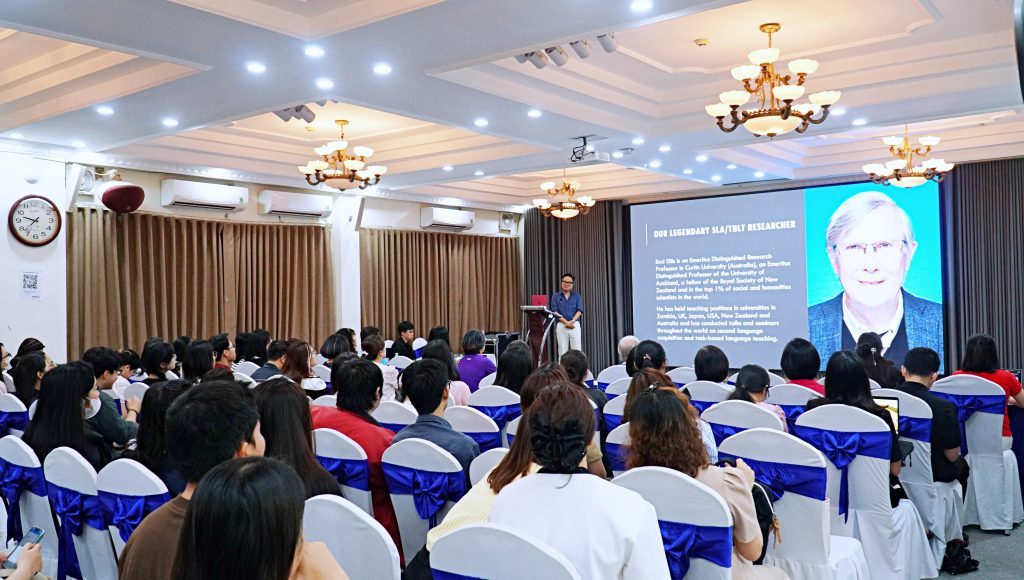
The symposium provided participants with an opportunity to engage with in-depth research and practical insights from one of the world’s most influential scholars in the fields of second language acquisition and task-based language teaching.
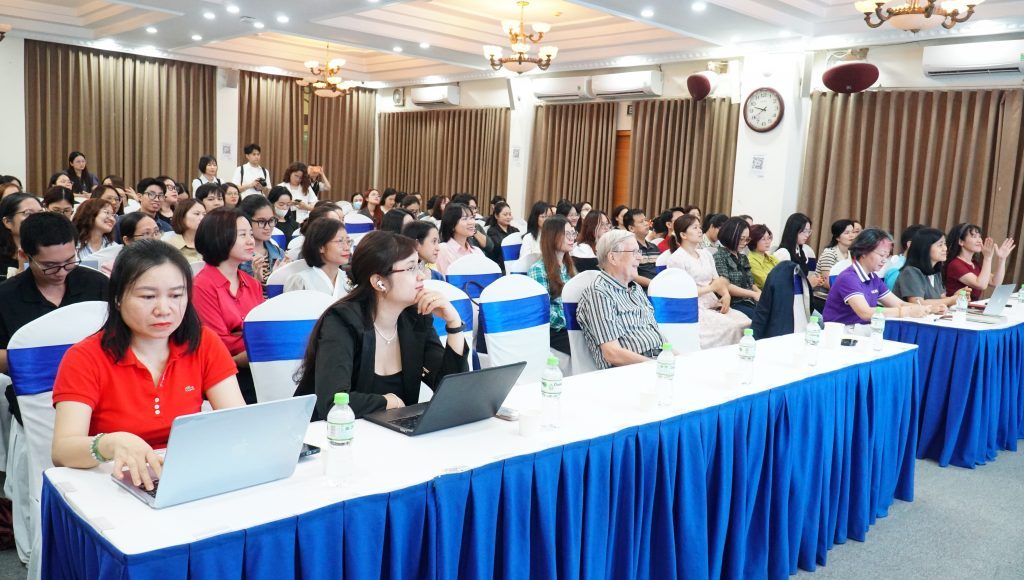
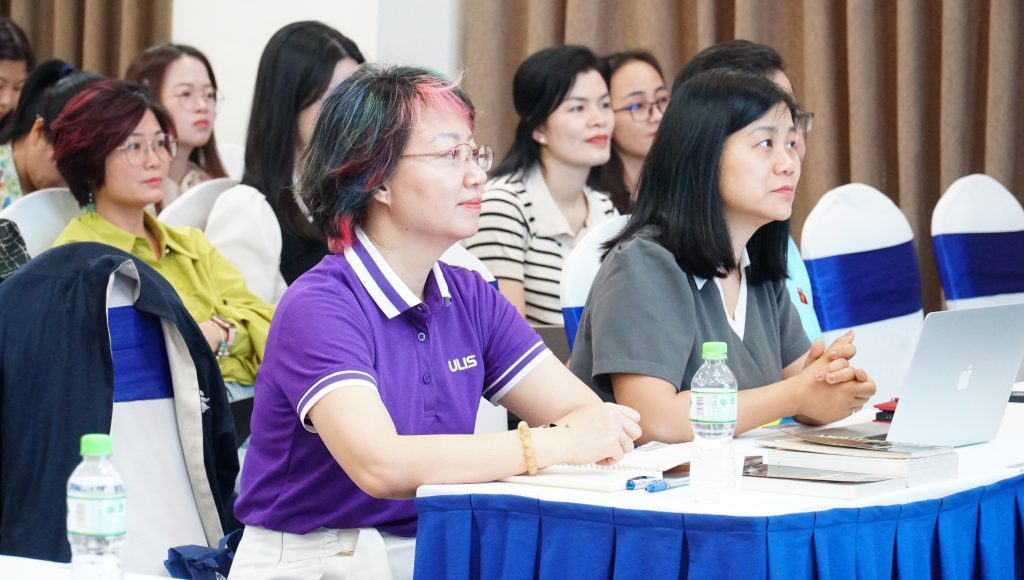

The program was honored to welcome Rod Ellis, Emeritus Research Professor at Curtin University (Australia), Distinguished Professor Emeritus at the University of Auckland, Fellow of the Royal Society of New Zealand, and one of the top 1% most influential scholars in the social sciences and humanities worldwide. Throughout his career, he has taught at universities in Zambia, the United Kingdom, Japan, the United States, New Zealand, and Australia, while also delivering lectures internationally on second language acquisition and task-based language teaching.
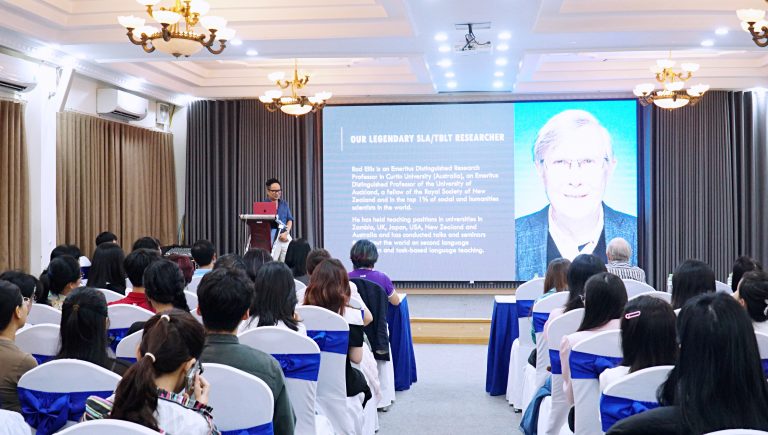
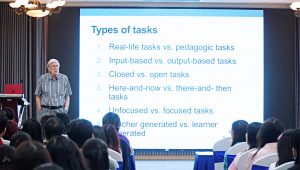
In the first part of the session, Professor Rod Ellis provided a clear definition of the concept of “tasks” in language teaching and distinguished tasks from traditional language exercises. Through concrete examples, participants gained a clearer understanding of the role of tasks in promoting learners’ real-world language use.
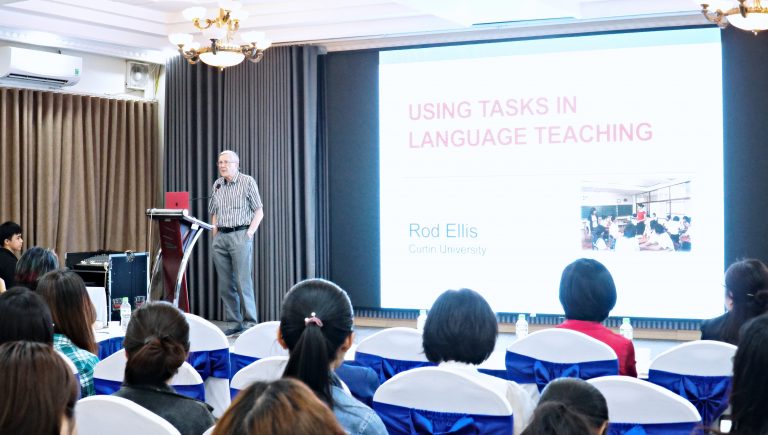
The speaker then introduced different categories of tasks and illustrated each type with practical examples to highlight their distinctive features. In addition, Professor Ellis suggested task types suitable for different groups of learners, offering lecturers valuable guidance for selecting flexible and effective teaching methods.
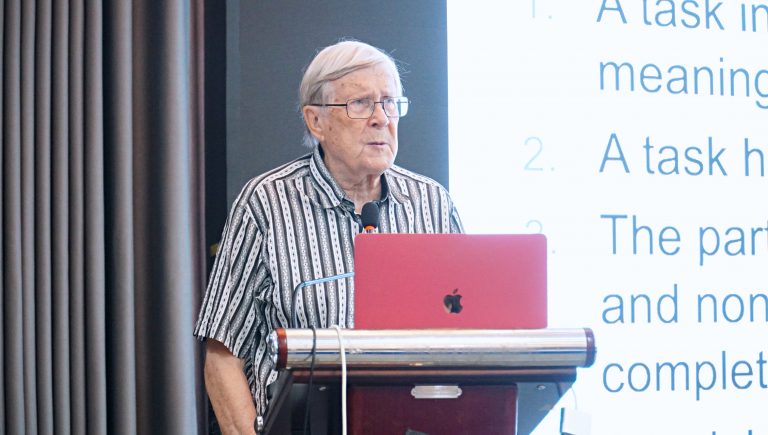
Another important focus of the symposium was the integration of tasks into language classrooms through two major approaches: task-supported language teaching and task-based language teaching. Professor Ellis analyzed the theoretical foundations, advantages, and limitations of each approach, enabling participants to gain deeper insights into their practical application in teaching.

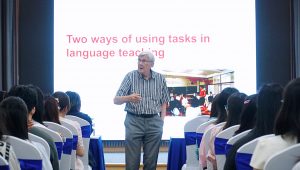
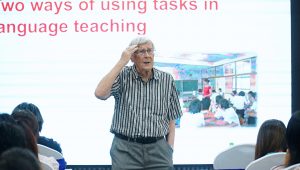
In the final part of the program, Professor Rod Ellis addressed a highly practical question: how to determine whether a teaching task is truly effective. According to him, evaluation should be based on the original objectives of the task, the extent to which learners achieve the intended outcomes, and the value the activity brings to the learning process. He also shared a specific example of how teachers can evaluate task effectiveness after class.
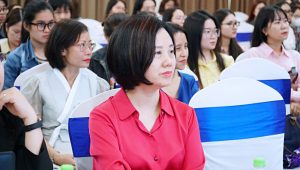


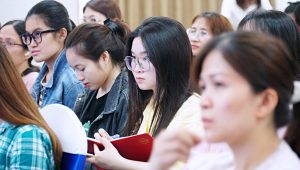

The symposium not only provided profound academic knowledge but also opened up new perspectives on innovating foreign language teaching methods in the context of modern education. Professor Rod Ellis’s insights served as a strong source of inspiration for lecturers, students, and researchers striving to enhance the quality of language teaching and learning.
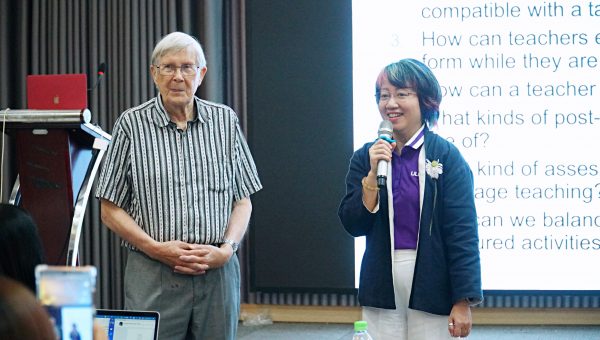
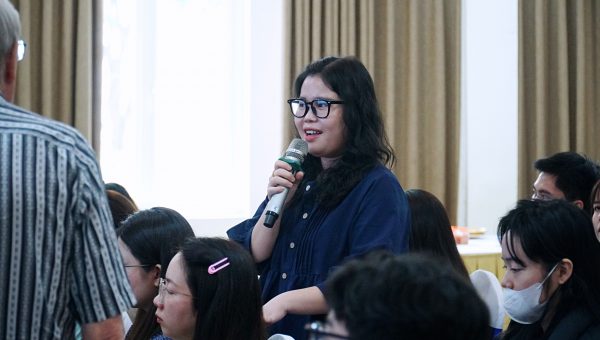
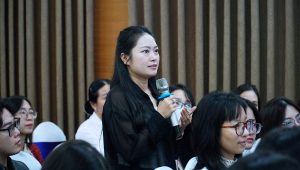
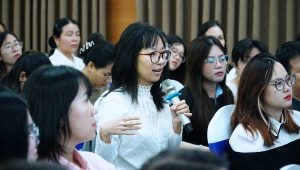
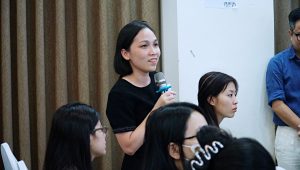
The symposium “Using Tasks in Language Teaching” concluded successfully, leaving participants with valuable academic insights while reaffirming the importance of connecting theory with practice in language education. The event also offered attendees an opportunity to engage with progressive educational thinking and better prepare for future innovations in teaching and learning.
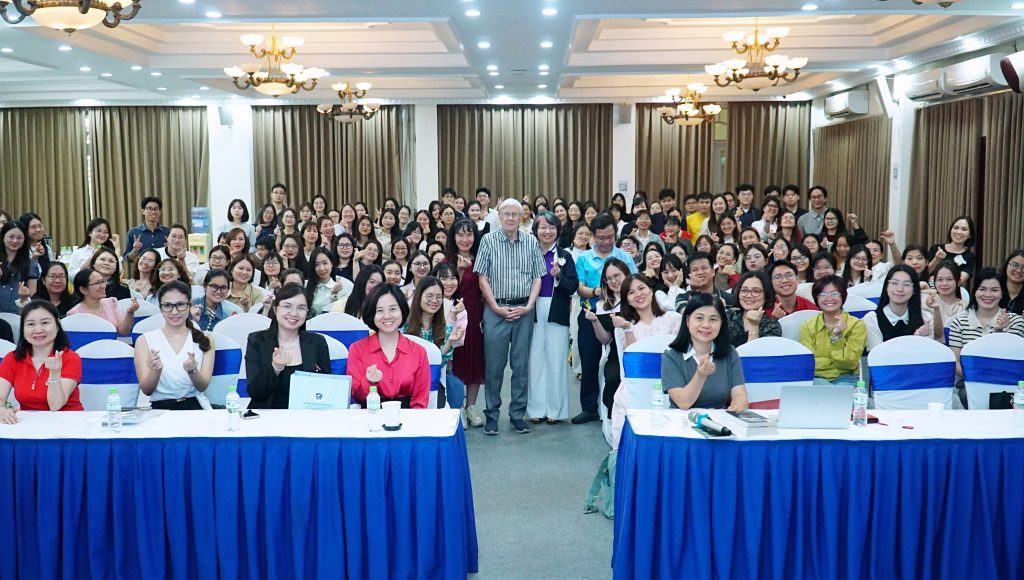
Mai Anh/ĐSTT